
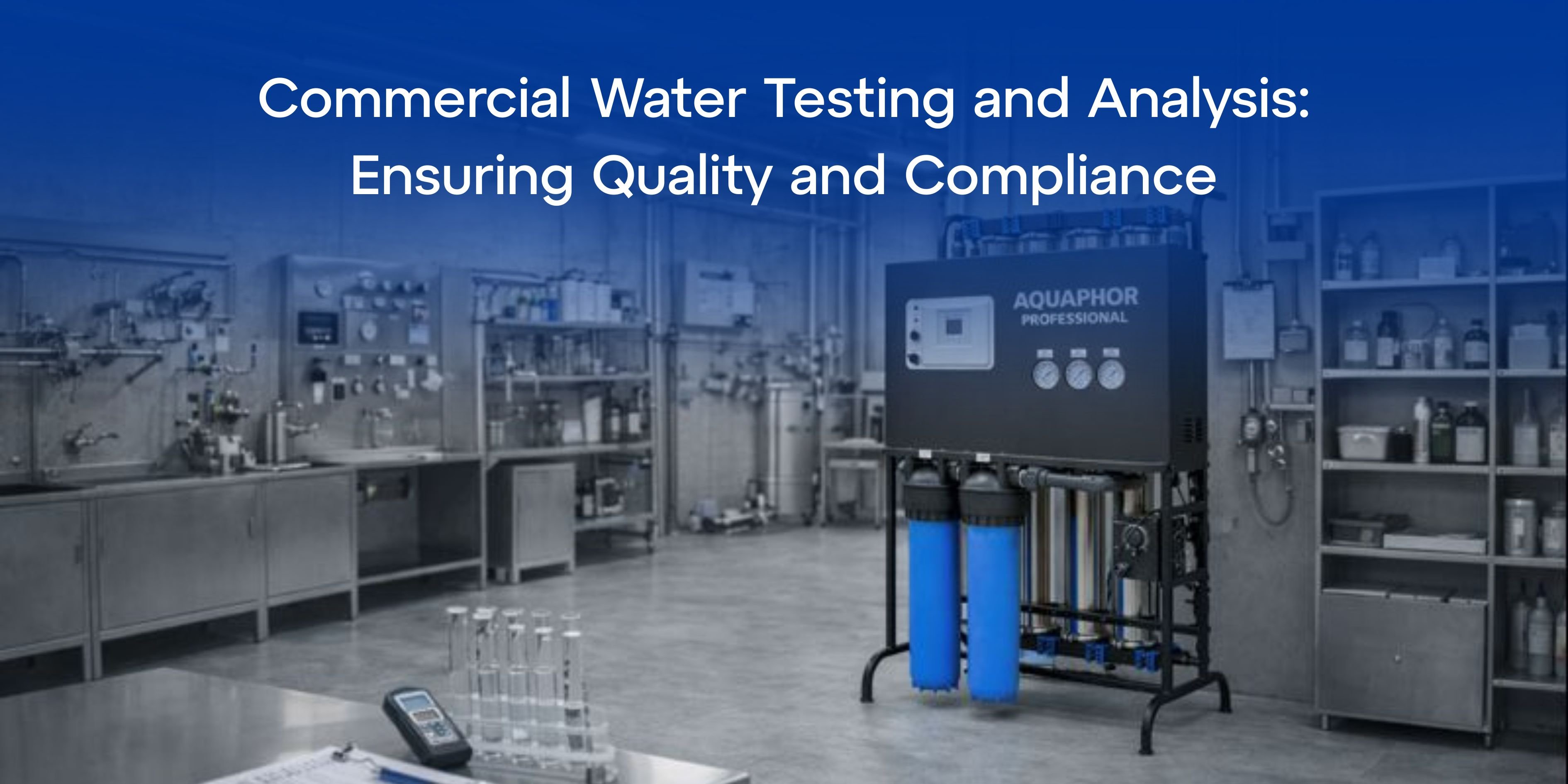
Commercial Water Testing and Analysis: Ensuring Quality and Compliance
AQUAPHOR
case,news
Commercial Water Testing and Analysis: Ensuring Quality and Compliance – FAQ

Frequently Asked Questions

What types of water testing are required for commercial applications?

+

Commercial water testing typically includes chemical analysis (ions, metals, organics), microbiological testing (coliforms, heterotrophic bacteria), physical parameters (turbidity, color), and specialty tests such as PFAS, TOC, and conductivity.

How often should businesses test their commercial water systems?

+

Testing frequency depends on the application and risk profile. This may include continuous online sensors, daily microbial checks, weekly chemical testing, monthly laboratory analysis, and additional testing after system changes or maintenance.

What parameters are most critical in commercial water quality testing?

+

Key parameters include TDS, hardness, heavy metals, microbial counts, pH, chlorine, conductivity, turbidity, and residual disinfectant levels.

How do businesses choose the right laboratory for water testing services?

+

Businesses should select certified laboratories (ISO/IEC 17025) with experience in industrial and commercial water testing, fast turnaround times, validated methodologies, and strong technical support.

What do water test results mean and how should businesses respond to them?

+

Results are compared against allowable thresholds. Any deviation may require corrective actions such as adjusting treatment chemistry, flushing systems, performing maintenance, or triggering alarms and follow-up testing.

How can regular testing prevent costly water quality problems?

+

Regular testing enables early detection of performance drift, fouling, contamination, or membrane degradation, helping prevent failures, downtime, and expensive emergency repairs.

What are the legal requirements for water testing documentation?

+

Regulations often require retention of test logs, calibration records, audit trails, instrument certificates, validated analytical methods, and documented corrective actions for inspections and audits.

How do mobile testing kits compare to laboratory analysis for commercial use?

+

Mobile kits are useful for rapid on-site checks of basic parameters but lack the precision, trace-level detection, and regulatory credibility required for certified compliance testing, which must be performed by accredited laboratories.

What testing protocols apply during water system commissioning and maintenance?

+

Protocols include establishing baseline water profiles, system flushing, blank checks, challenge testing, validation procedures, and post-maintenance re-testing to confirm performance and compliance.

How can businesses use water testing data to optimize system performance?

+

By applying trend analysis and predictive modeling, businesses can optimize chemical dosing, anticipate component replacement, improve reuse strategies, and maintain stable system performance over time.

What emergency testing procedures should businesses have for water quality incidents?

+

Emergency procedures include rapid microbial or chemical re-testing, isolating affected sections, cross-checking results with independent laboratories, and immediate remediation to protect operations and compliance.

Turn Water Test Data Into Action

Share your water source, application, and compliance requirements. Our experts will define the right testing strategy and help you maintain quality, safety, and regulatory confidence.

Commercial Water Testing and Analysis: Ensuring Quality and Compliance

Commercial Water Testing and Analysis: Ensuring Quality and Compliance – FAQ

Frequently Asked Questions

What types of water testing are required for commercial applications?

+

Commercial water testing typically includes chemical analysis (ions, metals, organics), microbiological testing (coliforms, heterotrophic bacteria), physical parameters (turbidity, color), and specialty tests such as PFAS, TOC, and conductivity.

How often should businesses test their commercial water systems?

+

Testing frequency depends on the application and risk profile. This may include continuous online sensors, daily microbial checks, weekly chemical testing, monthly laboratory analysis, and additional testing after system changes or maintenance.

What parameters are most critical in commercial water quality testing?

+

Key parameters include TDS, hardness, heavy metals, microbial counts, pH, chlorine, conductivity, turbidity, and residual disinfectant levels.

How do businesses choose the right laboratory for water testing services?

+

Businesses should select certified laboratories (ISO/IEC 17025) with experience in industrial and commercial water testing, fast turnaround times, validated methodologies, and strong technical support.

What do water test results mean and how should businesses respond to them?

+

Results are compared against allowable thresholds. Any deviation may require corrective actions such as adjusting treatment chemistry, flushing systems, performing maintenance, or triggering alarms and follow-up testing.

How can regular testing prevent costly water quality problems?

+

Regular testing enables early detection of performance drift, fouling, contamination, or membrane degradation, helping prevent failures, downtime, and expensive emergency repairs.

What are the legal requirements for water testing documentation?

+

Regulations often require retention of test logs, calibration records, audit trails, instrument certificates, validated analytical methods, and documented corrective actions for inspections and audits.

How do mobile testing kits compare to laboratory analysis for commercial use?

+

Mobile kits are useful for rapid on-site checks of basic parameters but lack the precision, trace-level detection, and regulatory credibility required for certified compliance testing, which must be performed by accredited laboratories.

What testing protocols apply during water system commissioning and maintenance?

+

Protocols include establishing baseline water profiles, system flushing, blank checks, challenge testing, validation procedures, and post-maintenance re-testing to confirm performance and compliance.

How can businesses use water testing data to optimize system performance?

+

By applying trend analysis and predictive modeling, businesses can optimize chemical dosing, anticipate component replacement, improve reuse strategies, and maintain stable system performance over time.

What emergency testing procedures should businesses have for water quality incidents?

+

Emergency procedures include rapid microbial or chemical re-testing, isolating affected sections, cross-checking results with independent laboratories, and immediate remediation to protect operations and compliance.

Turn Water Test Data Into Action

Share your water source, application, and compliance requirements. Our experts will define the right testing strategy and help you maintain quality, safety, and regulatory confidence.

Share
Aquaphor uses cookies

Our websites require some cookies to function properly ("Strictly Necessary"). In addition, we use our own and third-party cookies and similar technologies to analyze site usage, improve and personalize the user experience, and for advertising. For more information, please review the "Customize cookies" link. By continuing you to receive all cookies on all AQUAPHOR websites.

Customize cookies

Reject optional cookies
Accept all cookies