
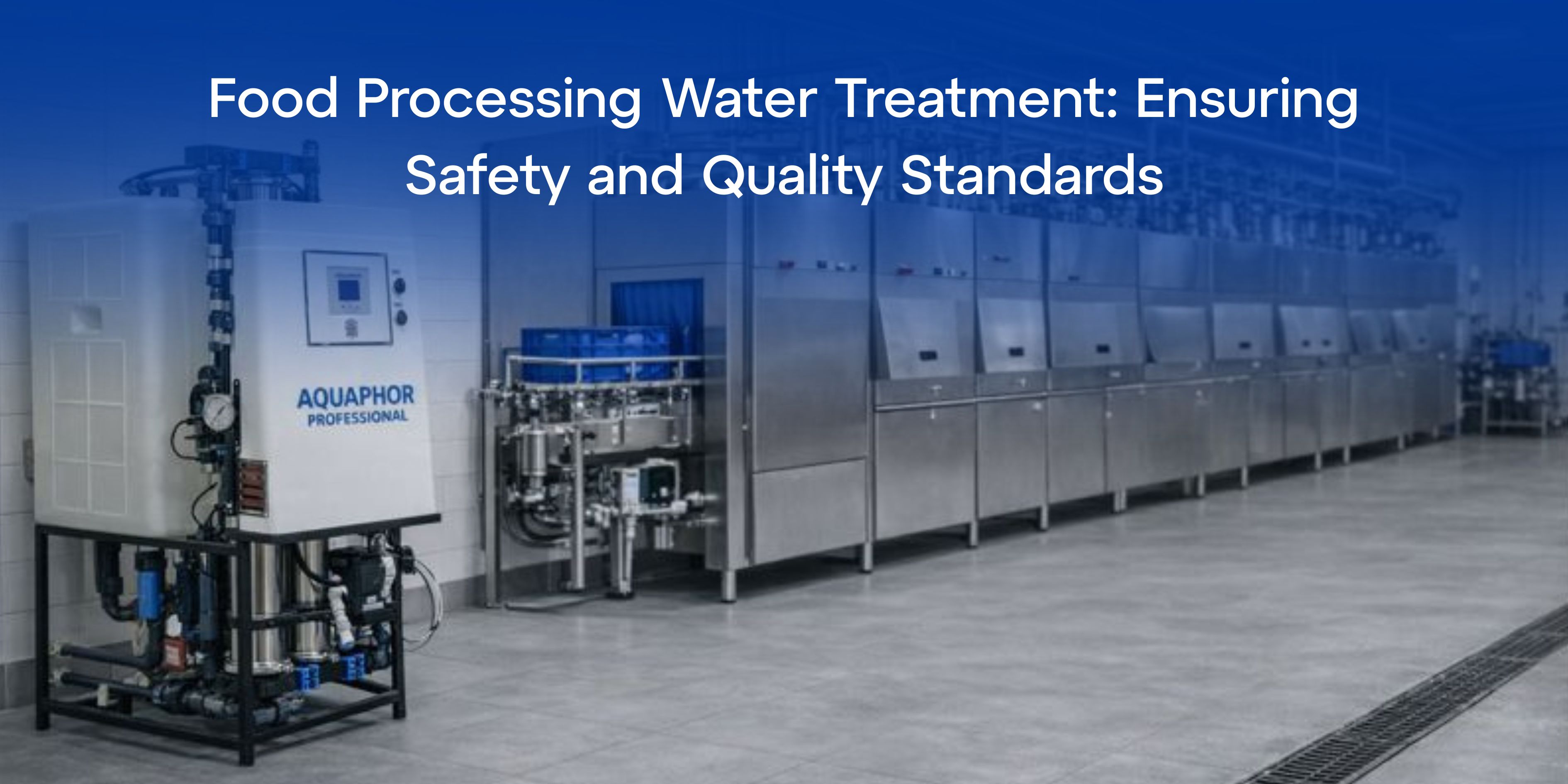
Food Processing Water Treatment: Ensuring Safety and Quality Standards
AQUAPHOR
food,case,news
Food Processing Water Treatment – FAQ

Frequently Asked Questions

What are the food safety requirements for water used in food processing?

+

Water must meet potable or food-grade standards and comply with local food safety laws. Typical controls include limits on microbial counts, chlorine residuals, heavy metals, and chemical residues—based on the water’s use (ingredient, rinse, CIP, steam/boiler feed, etc.).

How does water quality affect food product taste, texture, and shelf life?

+

Impurities can create off-flavors, disrupt microbial stability, alter concentrations, and accelerate oxidation—reducing product consistency and shortening shelf life.

What water treatment technologies are best for different food processing applications?

+

Common technologies include RO, micro/ultrafiltration, UV, ozone disinfection, ion exchange, activated carbon, and engineered hybrid combinations—selected according to the feed water and the target application requirements.

How can food processors reduce water consumption while maintaining quality?

+

Through closed-loop recycling, RO permeate reuse, concentrate recirculation, and batch process optimization—supported by strong monitoring and hygiene controls.

What are the hygiene requirements for food processing water systems?

+

Systems must follow strict hygiene practices: scheduled sanitization and CIP procedures, hygienic materials (e.g., 316 stainless steel), wash-down resistant components, and piping designed to eliminate dead legs and prevent stagnation.

How do water treatment systems prevent contamination in food production?

+

By removing microorganisms, particulates, and chemical contaminants that can cause spoilage or hazards—using multi-barrier protection such as filtration stages, sterile filters, and disinfection (UV/ozone) tailored to the process risk.

What testing protocols ensure food processing water meets standards?

+

Frequent microbial assays, chemical residue testing, continuous monitoring (e.g., conductivity, turbidity), and periodic third-party laboratory validation to confirm compliance and control effectiveness.

How can food businesses implement water recycling systems safely?

+

Use barrier treatment (for example, RO + UV) before reuse, validate and monitor for cross-contamination risks, and follow regulatory criteria for reuse quality—supported by documented verification and corrective actions.

What documentation is required for food processing water quality compliance?

+

Documentation typically includes sampling and testing logs, batch production and cleaning records, continuous monitoring/sensor data, validation and verification reports, HACCP documentation, corrective action records, and traceable audit trails. In the EU, these practices align with hygiene requirements under Regulation (EC) No 852/2004.

How do seasonal variations in water quality affect food processing operations?

+

Seasonal shifts can change turbidity, hardness, and contaminant loads—requiring pretreatment tuning, dosing adjustments, and potentially additional disinfection to maintain stable process water quality.

What backup systems ensure continuous water supply during peak production?

+

Buffer tanks, dual treatment trains, mobile or modular units, and built-in redundancy help maintain supply during peak demand and prevent costly production interruptions.

Protect Product Quality with Food-Grade Water Treatment

Tell us your process and target standards. Our experts will recommend a hygienic, multi-barrier treatment and monitoring setup that supports compliance, consistent taste, and reliable production.

Food Processing Water Treatment: Ensuring Safety and Quality Standards

Food Processing Water Treatment – FAQ

Frequently Asked Questions

What are the food safety requirements for water used in food processing?

+

Water must meet potable or food-grade standards and comply with local food safety laws. Typical controls include limits on microbial counts, chlorine residuals, heavy metals, and chemical residues—based on the water’s use (ingredient, rinse, CIP, steam/boiler feed, etc.).

How does water quality affect food product taste, texture, and shelf life?

+

Impurities can create off-flavors, disrupt microbial stability, alter concentrations, and accelerate oxidation—reducing product consistency and shortening shelf life.

What water treatment technologies are best for different food processing applications?

+

Common technologies include RO, micro/ultrafiltration, UV, ozone disinfection, ion exchange, activated carbon, and engineered hybrid combinations—selected according to the feed water and the target application requirements.

How can food processors reduce water consumption while maintaining quality?

+

Through closed-loop recycling, RO permeate reuse, concentrate recirculation, and batch process optimization—supported by strong monitoring and hygiene controls.

What are the hygiene requirements for food processing water systems?

+

Systems must follow strict hygiene practices: scheduled sanitization and CIP procedures, hygienic materials (e.g., 316 stainless steel), wash-down resistant components, and piping designed to eliminate dead legs and prevent stagnation.

How do water treatment systems prevent contamination in food production?

+

By removing microorganisms, particulates, and chemical contaminants that can cause spoilage or hazards—using multi-barrier protection such as filtration stages, sterile filters, and disinfection (UV/ozone) tailored to the process risk.

What testing protocols ensure food processing water meets standards?

+

Frequent microbial assays, chemical residue testing, continuous monitoring (e.g., conductivity, turbidity), and periodic third-party laboratory validation to confirm compliance and control effectiveness.

How can food businesses implement water recycling systems safely?

+

Use barrier treatment (for example, RO + UV) before reuse, validate and monitor for cross-contamination risks, and follow regulatory criteria for reuse quality—supported by documented verification and corrective actions.

What documentation is required for food processing water quality compliance?

+

Documentation typically includes sampling and testing logs, batch production and cleaning records, continuous monitoring/sensor data, validation and verification reports, HACCP documentation, corrective action records, and traceable audit trails. In the EU, these practices align with hygiene requirements under Regulation (EC) No 852/2004.

How do seasonal variations in water quality affect food processing operations?

+

Seasonal shifts can change turbidity, hardness, and contaminant loads—requiring pretreatment tuning, dosing adjustments, and potentially additional disinfection to maintain stable process water quality.

What backup systems ensure continuous water supply during peak production?

+

Buffer tanks, dual treatment trains, mobile or modular units, and built-in redundancy help maintain supply during peak demand and prevent costly production interruptions.

Protect Product Quality with Food-Grade Water Treatment

Tell us your process and target standards. Our experts will recommend a hygienic, multi-barrier treatment and monitoring setup that supports compliance, consistent taste, and reliable production.

Share
Aquaphor uses cookies

Our websites require some cookies to function properly ("Strictly Necessary"). In addition, we use our own and third-party cookies and similar technologies to analyze site usage, improve and personalize the user experience, and for advertising. For more information, please review the "Customize cookies" link. By continuing you to receive all cookies on all AQUAPHOR websites.

Customize cookies

Reject optional cookies
Accept all cookies