
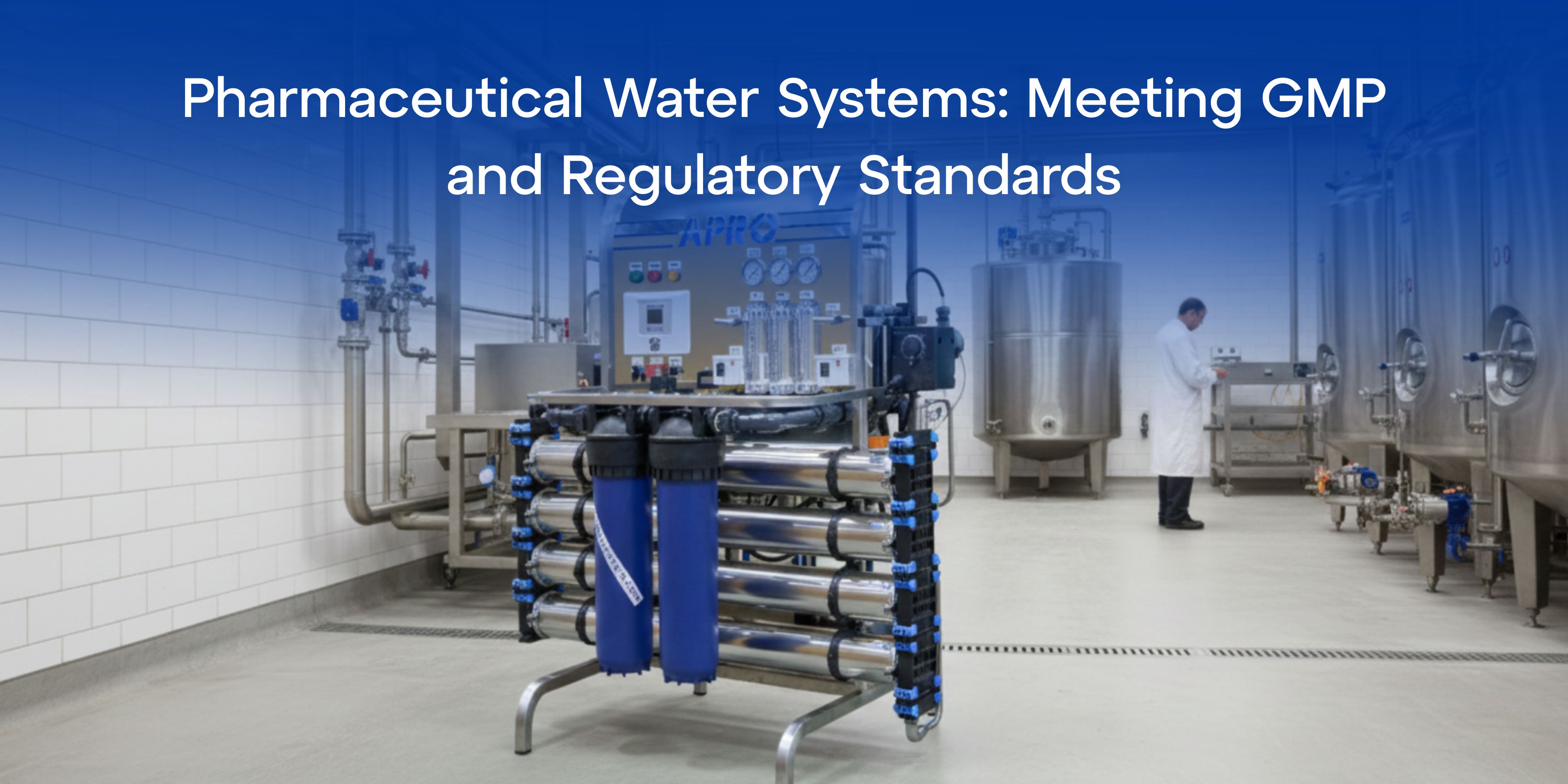
Pharmaceutical Water Systems: Meeting GMP and Regulatory Standards
AQUAPHOR
lab & medical,case,news
Pharmaceutical Water Systems: Meeting GMP and Regulatory Standards – FAQ

Frequently Asked Questions

What are the different grades of pharmaceutical water required?

+

Pharmaceutical manufacturing requires several grades of water with defined chemical, microbial, and endotoxin limits, including Purified Water (PW), Water for Injection (WFI), and Clean Steam. PW is used for non-sterile product preparation and equipment rinsing, WFI for sterile product manufacture and final rinsing, and Clean Steam for sterilization processes.

How do pharmaceutical water systems meet Good Manufacturing Practice requirements?

+

Compliance is achieved through qualified design, installation, and operation; documented validation and performance qualification; continuous monitoring of critical parameters (e.g., conductivity, TOC, temperature, flow); regular microbiological testing; and robust preventive measures to avoid cross-contamination (sanitary design, redundancy, and controlled maintenance). All activities are supported by complete documentation and periodic review to maintain a state of control.

What validation protocols are required for pharmaceutical water treatment systems?

+

Validation follows a structured qualification approach (IQ/OQ/PQ) aligned with EU GMP Annex 15 and relevant pharmacopoeial monographs. It includes verification of sanitization effectiveness, microbial challenge testing where applicable, and documented performance of alarms, controls, and monitoring. Revalidation is required after critical changes, major maintenance, or extended shutdowns to confirm continued compliance and system control.

How often must pharmaceutical water systems be sanitized and tested?

+

Frequencies depend on risk and system design. Sanitization may be daily to weekly; microbiological testing daily (or more often for higher-risk points); chemical tests weekly; and performance reviews or trend checks monthly.

What are the critical quality parameters for pharmaceutical water production?

+

Key parameters include conductivity and Total Organic Carbon (TOC) for ionic and organic purity; microbial count and bacterial endotoxin levels for microbiological control; and operational parameters such as temperature, flow, and differential pressure to ensure system integrity and hydraulic performance. pH may be monitored diagnostically but is not a compendial requirement for PW or WFI.

How do pharmaceutical companies ensure water system reliability and redundancy?

+

Reliability is typically achieved with parallel RO trains, backup pumps, dual heat exchangers, automatic switchover controls, and emergency storage capacity to maintain supply during downtime or peak demand.

What documentation and record-keeping requirements apply to pharmaceutical water?

+

Requirements generally include complete batch records, validation and qualification documentation, calibration logs, deviation and CAPA records, periodic review, and audit trails suitable for regulatory inspection and data integrity expectations.

How can pharmaceutical facilities optimize water system operational costs?

+

Cost optimization can include improving energy efficiency, recovering reject/waste where permitted, reducing chemical consumption, implementing preventive maintenance to avoid failures, and planning modular upgrades to extend system life without major redesign.

What training is required for personnel operating pharmaceutical water systems?

+

Personnel typically require training in GMP fundamentals, microbiology, instrumentation and alarms, validation procedures, sampling practices, cleaning/sanitization protocols, deviation handling, and regulatory compliance.

How do regulatory inspections assess pharmaceutical water system compliance?

+

Inspectors commonly review system design and sanitary engineering, validation/qualification records, sampling plans and results, trend data, alarm handling and deviations, sanitization history, change control and modifications, and overall documentation demonstrating ongoing control.

What emerging technologies are improving pharmaceutical water treatment?

+

Emerging improvements include advanced membranes (e.g., biomimetic or novel materials), expanded inline monitoring (real-time TOC and developing endotoxin sensors), AI-assisted control and trend analytics, and modular compact systems designed for faster qualification and scalable capacity.

Build a GMP-Ready Pharmaceutical Water System

Share your required water grade (PW/WFI/Clean Steam) and production needs. Our experts will recommend a validated, sanitary, and fully monitored treatment design to support compliance and audit readiness.

Pharmaceutical Water Systems: Meeting GMP and Regulatory Standards

Pharmaceutical Water Systems: Meeting GMP and Regulatory Standards – FAQ

Frequently Asked Questions

What are the different grades of pharmaceutical water required?

+

Pharmaceutical manufacturing requires several grades of water with defined chemical, microbial, and endotoxin limits, including Purified Water (PW), Water for Injection (WFI), and Clean Steam. PW is used for non-sterile product preparation and equipment rinsing, WFI for sterile product manufacture and final rinsing, and Clean Steam for sterilization processes.

How do pharmaceutical water systems meet Good Manufacturing Practice requirements?

+

Compliance is achieved through qualified design, installation, and operation; documented validation and performance qualification; continuous monitoring of critical parameters (e.g., conductivity, TOC, temperature, flow); regular microbiological testing; and robust preventive measures to avoid cross-contamination (sanitary design, redundancy, and controlled maintenance). All activities are supported by complete documentation and periodic review to maintain a state of control.

What validation protocols are required for pharmaceutical water treatment systems?

+

Validation follows a structured qualification approach (IQ/OQ/PQ) aligned with EU GMP Annex 15 and relevant pharmacopoeial monographs. It includes verification of sanitization effectiveness, microbial challenge testing where applicable, and documented performance of alarms, controls, and monitoring. Revalidation is required after critical changes, major maintenance, or extended shutdowns to confirm continued compliance and system control.

How often must pharmaceutical water systems be sanitized and tested?

+

Frequencies depend on risk and system design. Sanitization may be daily to weekly; microbiological testing daily (or more often for higher-risk points); chemical tests weekly; and performance reviews or trend checks monthly.

What are the critical quality parameters for pharmaceutical water production?

+

Key parameters include conductivity and Total Organic Carbon (TOC) for ionic and organic purity; microbial count and bacterial endotoxin levels for microbiological control; and operational parameters such as temperature, flow, and differential pressure to ensure system integrity and hydraulic performance. pH may be monitored diagnostically but is not a compendial requirement for PW or WFI.

How do pharmaceutical companies ensure water system reliability and redundancy?

+

Reliability is typically achieved with parallel RO trains, backup pumps, dual heat exchangers, automatic switchover controls, and emergency storage capacity to maintain supply during downtime or peak demand.

What documentation and record-keeping requirements apply to pharmaceutical water?

+

Requirements generally include complete batch records, validation and qualification documentation, calibration logs, deviation and CAPA records, periodic review, and audit trails suitable for regulatory inspection and data integrity expectations.

How can pharmaceutical facilities optimize water system operational costs?

+

Cost optimization can include improving energy efficiency, recovering reject/waste where permitted, reducing chemical consumption, implementing preventive maintenance to avoid failures, and planning modular upgrades to extend system life without major redesign.

What training is required for personnel operating pharmaceutical water systems?

+

Personnel typically require training in GMP fundamentals, microbiology, instrumentation and alarms, validation procedures, sampling practices, cleaning/sanitization protocols, deviation handling, and regulatory compliance.

How do regulatory inspections assess pharmaceutical water system compliance?

+

Inspectors commonly review system design and sanitary engineering, validation/qualification records, sampling plans and results, trend data, alarm handling and deviations, sanitization history, change control and modifications, and overall documentation demonstrating ongoing control.

What emerging technologies are improving pharmaceutical water treatment?

+

Emerging improvements include advanced membranes (e.g., biomimetic or novel materials), expanded inline monitoring (real-time TOC and developing endotoxin sensors), AI-assisted control and trend analytics, and modular compact systems designed for faster qualification and scalable capacity.

Build a GMP-Ready Pharmaceutical Water System

Share your required water grade (PW/WFI/Clean Steam) and production needs. Our experts will recommend a validated, sanitary, and fully monitored treatment design to support compliance and audit readiness.

Share
Aquaphor uses cookies

Our websites require some cookies to function properly ("Strictly Necessary"). In addition, we use our own and third-party cookies and similar technologies to analyze site usage, improve and personalize the user experience, and for advertising. For more information, please review the "Customize cookies" link. By continuing you to receive all cookies on all AQUAPHOR websites.

Customize cookies

Reject optional cookies
Accept all cookies