
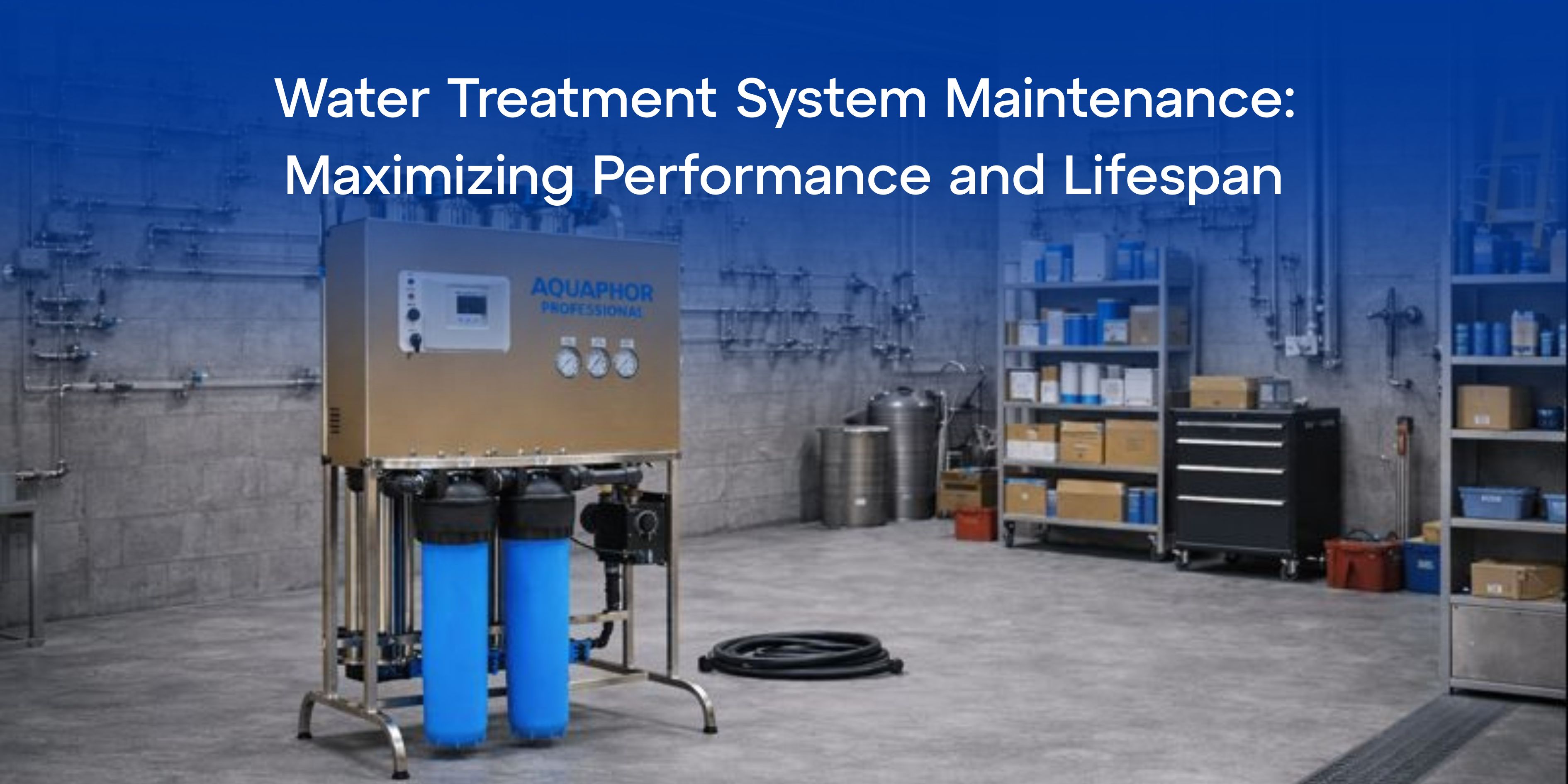
Water Treatment System Maintenance: Maximizing Performance and Lifespan
AQUAPHOR
case,news
Water Treatment System Maintenance: Maximizing Performance and Lifespan – FAQ

Frequently Asked Questions

What are the essential maintenance requirements for commercial water treatment systems?

+

Typical requirements include filter replacement, membrane cleaning, sensor calibration, disinfection procedures, valve inspection, leak checks, and verification of flow and pressure to confirm stable performance.

How can preventive maintenance reduce unexpected water system failures?

+

Preventive maintenance catches drift, wear, fouling, and build-up early—reducing the risk of sudden downtime and preventing small issues from escalating into major failures.

What are the signs that commercial water treatment systems need professional attention?

+

Common warning signs include rising differential pressure, reduced throughput, conductivity drift, repeated alarms, leaks, unusual noises, and increased reject ratio—often indicating fouling, wear, or control issues.

How do businesses develop effective maintenance schedules for water systems?

+

Schedules should be built on manufacturer guidance, operating hours and usage patterns, risk assessment outcomes, seasonal variations, and sensor-based performance data to maintain reliability and compliance.

What spare parts and consumables should businesses keep in stock?

+

Recommended inventory includes filtration cartridges, membranes, O-rings and sanitary seals, instrumentation sensors and probes, control valves and actuators, pump assemblies, replacement tubing and fittings, and validated cleaning/sanitizing chemicals. Stock levels should be based on criticality, lead time, and maintenance frequency to avoid interruptions.

How can staff training improve water system maintenance outcomes?

+

Trained staff can follow safe procedures, avoid common mistakes, identify early warning signs, and handle routine checks correctly—reducing reliance on emergency support and improving overall system uptime.

What are the costs of reactive vs preventive water system maintenance?

+

Reactive maintenance can cost three to ten times more than preventive programs due to unplanned downtime, emergency service rates, equipment damage, and production losses. Preventive maintenance reduces total cost of ownership by minimizing failure risk, extending equipment life, and supporting compliance.

How do service contracts benefit businesses with complex water treatment systems?

+

Service contracts typically provide guaranteed response time, scheduled preventive tasks, access to spare parts, training support, and predictable maintenance planning under one agreement.

What documentation should businesses maintain for water system service histories?

+

Maintain records of service dates, tasks performed, parts replaced, readings before and after service, technician notes, deviations, corrective actions, and sign-off approvals for traceability and audits.

How can remote monitoring improve water system maintenance efficiency?

+

Remote monitoring enables early detection, trend analysis, and remote troubleshooting—helping teams schedule site visits proactively and resolve issues before they cause downtime.

What seasonal maintenance considerations apply to commercial water systems?

+

Seasonal needs can include freeze protection and flow adjustments in colder months, and increased cleaning frequency or capacity checks during high-demand periods to maintain stable operation.

Keep Your Water System Performing Like New

Tell us your system type and operating conditions. Our experts will recommend a preventive maintenance plan, spare-parts list, and monitoring approach to maximize uptime and extend equipment life.

Water Treatment System Maintenance: Maximizing Performance and Lifespan

Water Treatment System Maintenance: Maximizing Performance and Lifespan – FAQ

Frequently Asked Questions

What are the essential maintenance requirements for commercial water treatment systems?

+

Typical requirements include filter replacement, membrane cleaning, sensor calibration, disinfection procedures, valve inspection, leak checks, and verification of flow and pressure to confirm stable performance.

How can preventive maintenance reduce unexpected water system failures?

+

Preventive maintenance catches drift, wear, fouling, and build-up early—reducing the risk of sudden downtime and preventing small issues from escalating into major failures.

What are the signs that commercial water treatment systems need professional attention?

+

Common warning signs include rising differential pressure, reduced throughput, conductivity drift, repeated alarms, leaks, unusual noises, and increased reject ratio—often indicating fouling, wear, or control issues.

How do businesses develop effective maintenance schedules for water systems?

+

Schedules should be built on manufacturer guidance, operating hours and usage patterns, risk assessment outcomes, seasonal variations, and sensor-based performance data to maintain reliability and compliance.

What spare parts and consumables should businesses keep in stock?

+

Recommended inventory includes filtration cartridges, membranes, O-rings and sanitary seals, instrumentation sensors and probes, control valves and actuators, pump assemblies, replacement tubing and fittings, and validated cleaning/sanitizing chemicals. Stock levels should be based on criticality, lead time, and maintenance frequency to avoid interruptions.

How can staff training improve water system maintenance outcomes?

+

Trained staff can follow safe procedures, avoid common mistakes, identify early warning signs, and handle routine checks correctly—reducing reliance on emergency support and improving overall system uptime.

What are the costs of reactive vs preventive water system maintenance?

+

Reactive maintenance can cost three to ten times more than preventive programs due to unplanned downtime, emergency service rates, equipment damage, and production losses. Preventive maintenance reduces total cost of ownership by minimizing failure risk, extending equipment life, and supporting compliance.

How do service contracts benefit businesses with complex water treatment systems?

+

Service contracts typically provide guaranteed response time, scheduled preventive tasks, access to spare parts, training support, and predictable maintenance planning under one agreement.

What documentation should businesses maintain for water system service histories?

+

Maintain records of service dates, tasks performed, parts replaced, readings before and after service, technician notes, deviations, corrective actions, and sign-off approvals for traceability and audits.

How can remote monitoring improve water system maintenance efficiency?

+

Remote monitoring enables early detection, trend analysis, and remote troubleshooting—helping teams schedule site visits proactively and resolve issues before they cause downtime.

What seasonal maintenance considerations apply to commercial water systems?

+

Seasonal needs can include freeze protection and flow adjustments in colder months, and increased cleaning frequency or capacity checks during high-demand periods to maintain stable operation.

Keep Your Water System Performing Like New

Tell us your system type and operating conditions. Our experts will recommend a preventive maintenance plan, spare-parts list, and monitoring approach to maximize uptime and extend equipment life.

Share
Aquaphor uses cookies

Our websites require some cookies to function properly ("Strictly Necessary"). In addition, we use our own and third-party cookies and similar technologies to analyze site usage, improve and personalize the user experience, and for advertising. For more information, please review the "Customize cookies" link. By continuing you to receive all cookies on all AQUAPHOR websites.

Customize cookies

Reject optional cookies
Accept all cookies